

Two front ends from Ludlow Street, one old idea and a good reason to shoot the same car twice.
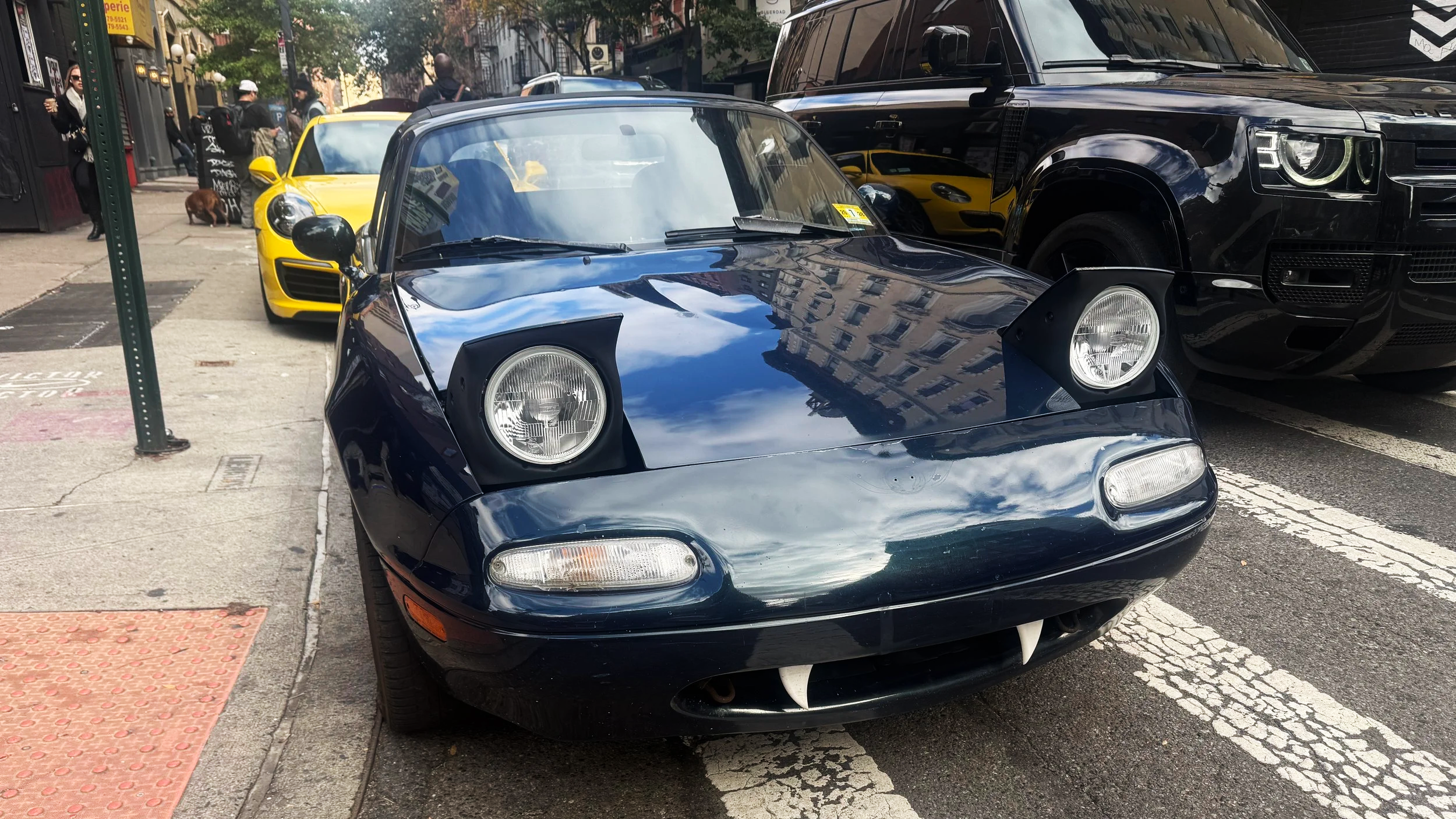
The blue roadster with its lamps raised on Ludlow. Photo by Michael S.
On Ludlow Street, a blue roadster sat at the curb with its round lamps standing up. A cream wedge nearby had its lamps tucked away. In a photo of the first car you look straight at the eyes. In a photo of the second you follow the line of the hood until it meets the bumper. Both cars are parked. One looks as if it just woke up.
That’s the trick with a pop-up headlight. It gives a designer two versions of the same front end and makes the driver part of the change. There’s the shape you notice across a parking lot in daylight. Then there’s the shape that arrives with the lights on.
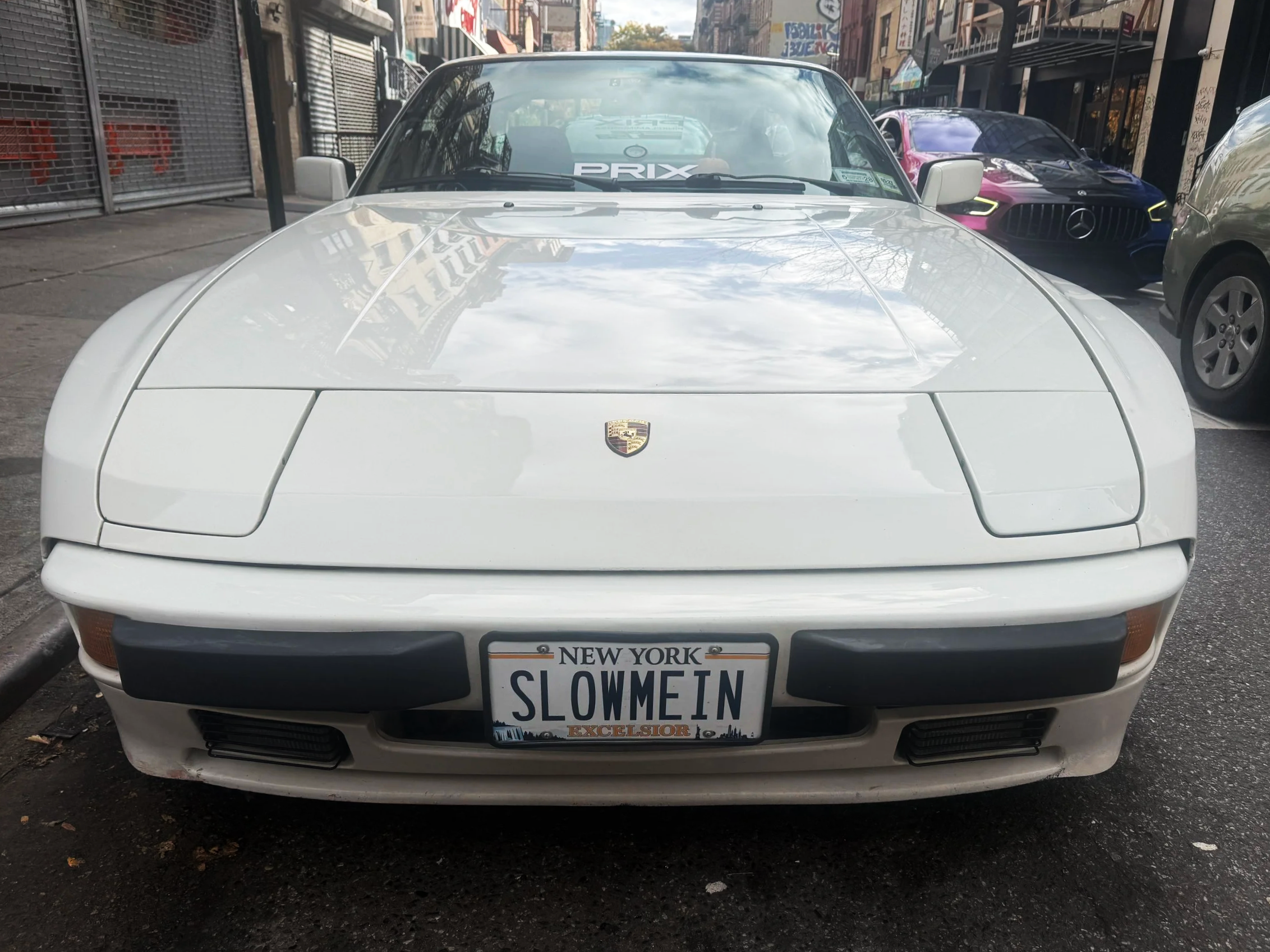
The cream wedge shows how much the shut lamps change the nose. Photo by Michael S.
The hand-crank years
The Cord 810, introduced for 1936, put its lights into the front fenders. The driver cranked them up by hand. Look at one with the headlights tucked away and you see how much of the work the fender shape is doing. The lights can be large, round things because they spend daylight out of sight. That was a clever way to get a smooth front end at a time when a headlamp was a much more obvious object than it is now.
Later versions made the movement automatic. The idea showed up on sports cars with very different personalities. Some made the front look almost flat when the lamps were down. Others had round lamps that gave a friendly little roadster a completely different face when they came up.
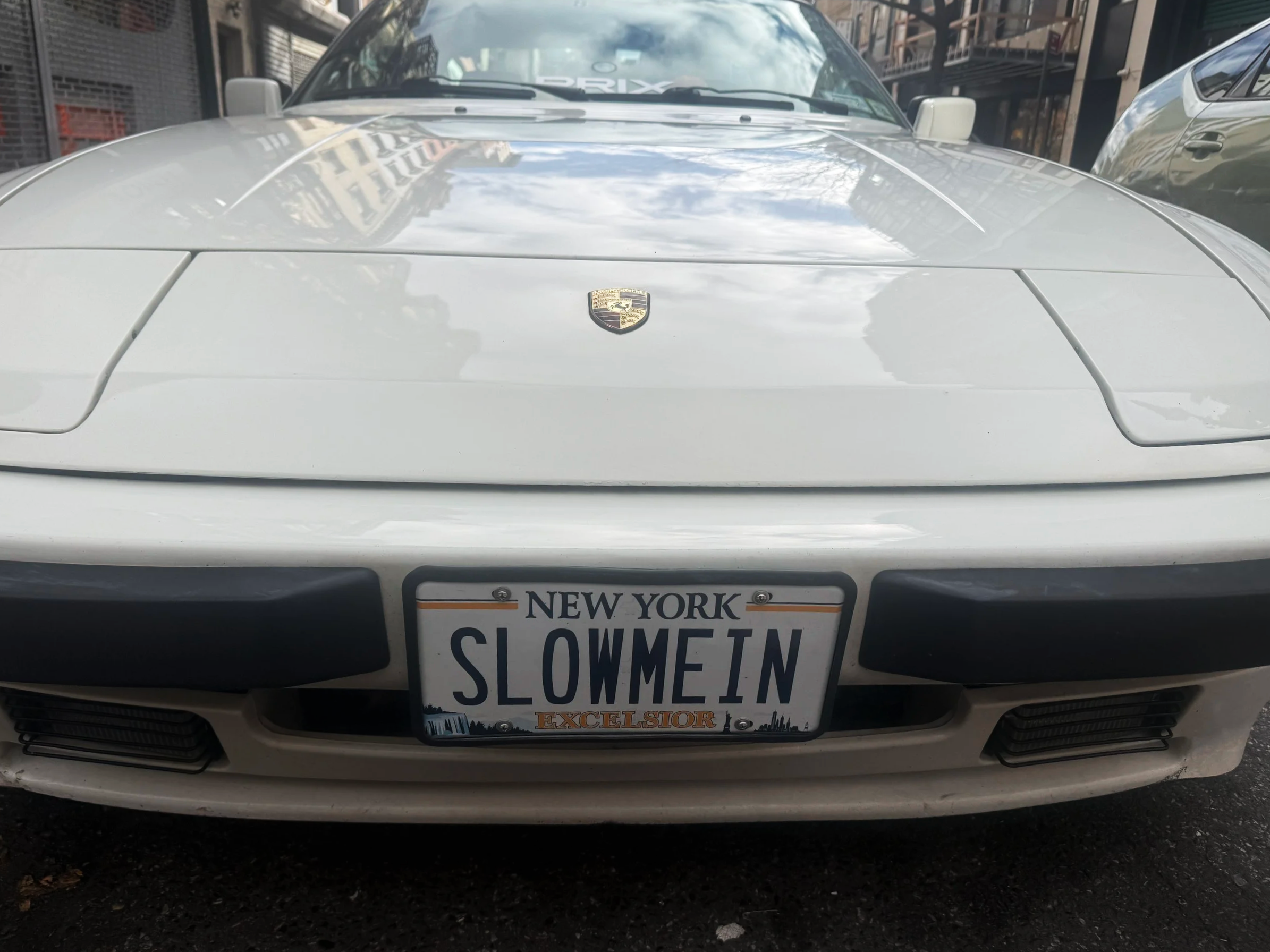
Look for the outline of the headlamp doors on the hood. Photo by Michael S.
What the second shot gets you
A moving headlamp brings hinges, linkages and something to raise it. A fixed lamp designed into the body can do its job without those extra moving pieces. As lighting hardware and front-end design changed, the design payoff for hiding the lamps got smaller. By 2004, the Chevrolet Corvette and Lotus Esprit were among the last holdouts. The idea had gone from a fresh way to draw a front fender to a feature you could pick out as belonging to an era.
There’s still a good reason to look for it with a camera. Shoot low from the front corner with the lights shut and watch where the hood line goes. Then shoot the same angle with the lights up if the owner is happy to oblige. Match the distance. Leave the framing alone. The difference between the two pictures is the whole point.
Our Ludlow shots give us the same comparison across two cars. One wears the lights on its face and the other lets you see what the body looks like with them put away. It’s a nice reminder that the best frame at a meet can be the second one you take.
Sources