

What truckers were actually doing with all that radio chatter.
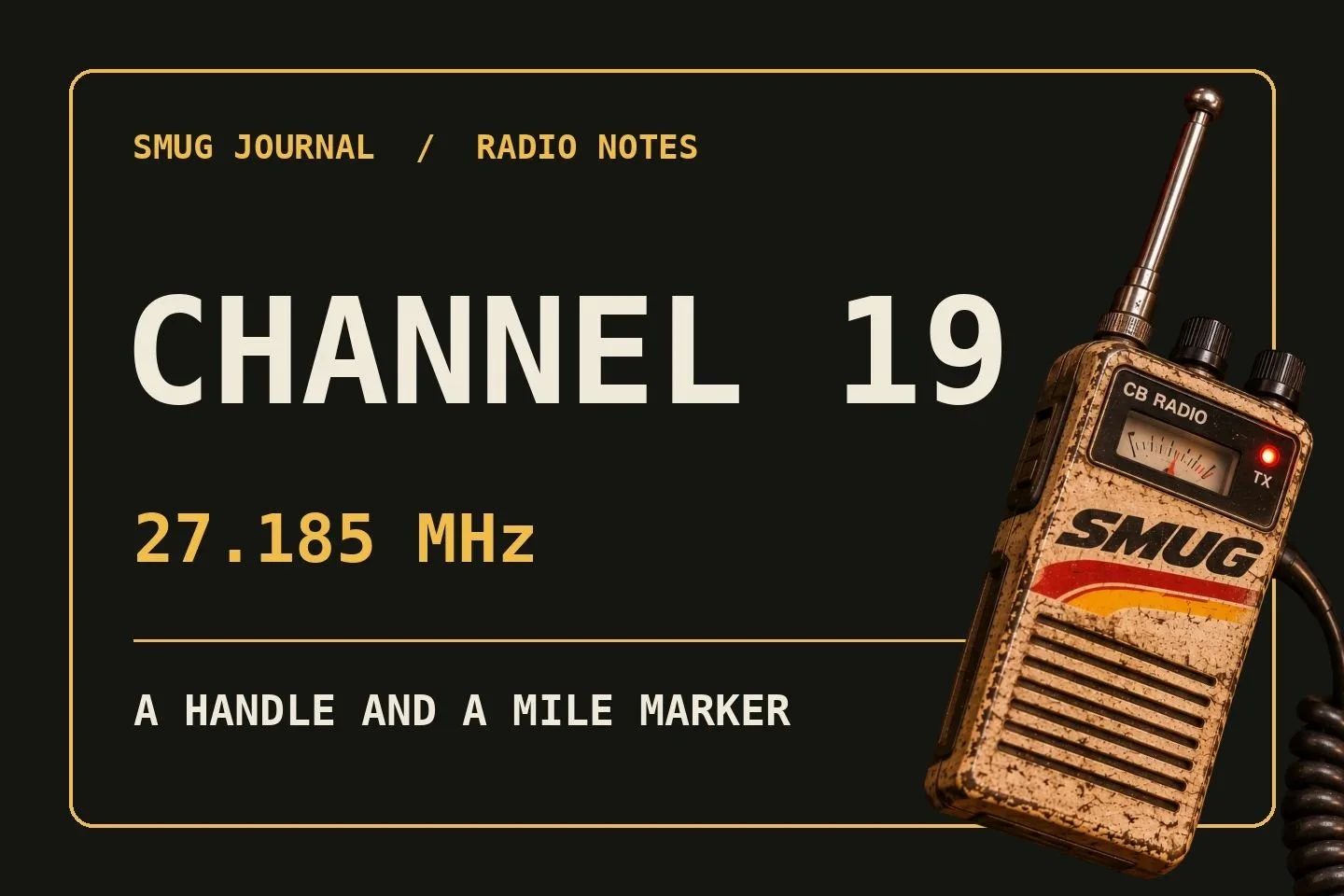
Channel 19, the customary truckers’ road channel.
“Convoy” makes a CB radio sound like a good place to get a nickname. That part is true to the culture. The Rubber Duck is the one you remember after the record stops. But a useful voice on the highway also gives you something you can act on: which direction, what’s ahead and about where you’ll see it.
Channel 19, at 27.185 MHz, became a customary road channel for truckers. A federal trade report from the 1970s gives a better idea of what that meant than any movie chase does. During the 1973 fuel crisis, interstate drivers used CB sets to find service stations that still had fuel. The answer mattered because it could come from somebody who had just seen the thing you needed, while you were still close enough for it to change your plans.
What a short call sounds like
A handle is the name you go by on the radio. It helps give a voice an identity, particularly if the same people hear one another often. In a road call, your position is what makes the rest of the information useful. “Northbound near mile 42, right lane stopped” is enough to get the idea across. A story about how long you’ve been stuck can wait until the channel is clear.
That’s also why it helps to listen before speaking. You find out whether the channel is occupied, whether somebody has already answered the question and whether the people talking are even on your stretch of road. The set can bring strangers into earshot. They may still be headed in the opposite direction.
Why the songs got it right
In “Convoy,” the handles make it possible to keep track of a story with no faces in it. In Smokey and the Bandit, voices bridge the distance between a Trans Am and a truck doing separate jobs. A good CB exchange makes the arrangement plain in a few words. One person can see a piece of the road that the other person hasn’t reached yet.
Put the two tracks next to each other and listen for the change in scale. One is a pair of drivers trying to get a load delivered on time. The other keeps adding voices and vehicles until the road itself feels like part of the conversation. The small thing underneath both is the same: one driver can tell another what’s coming.
Sources