

The RSR name belongs to a racing history much larger than a badge on a parked Porsche.
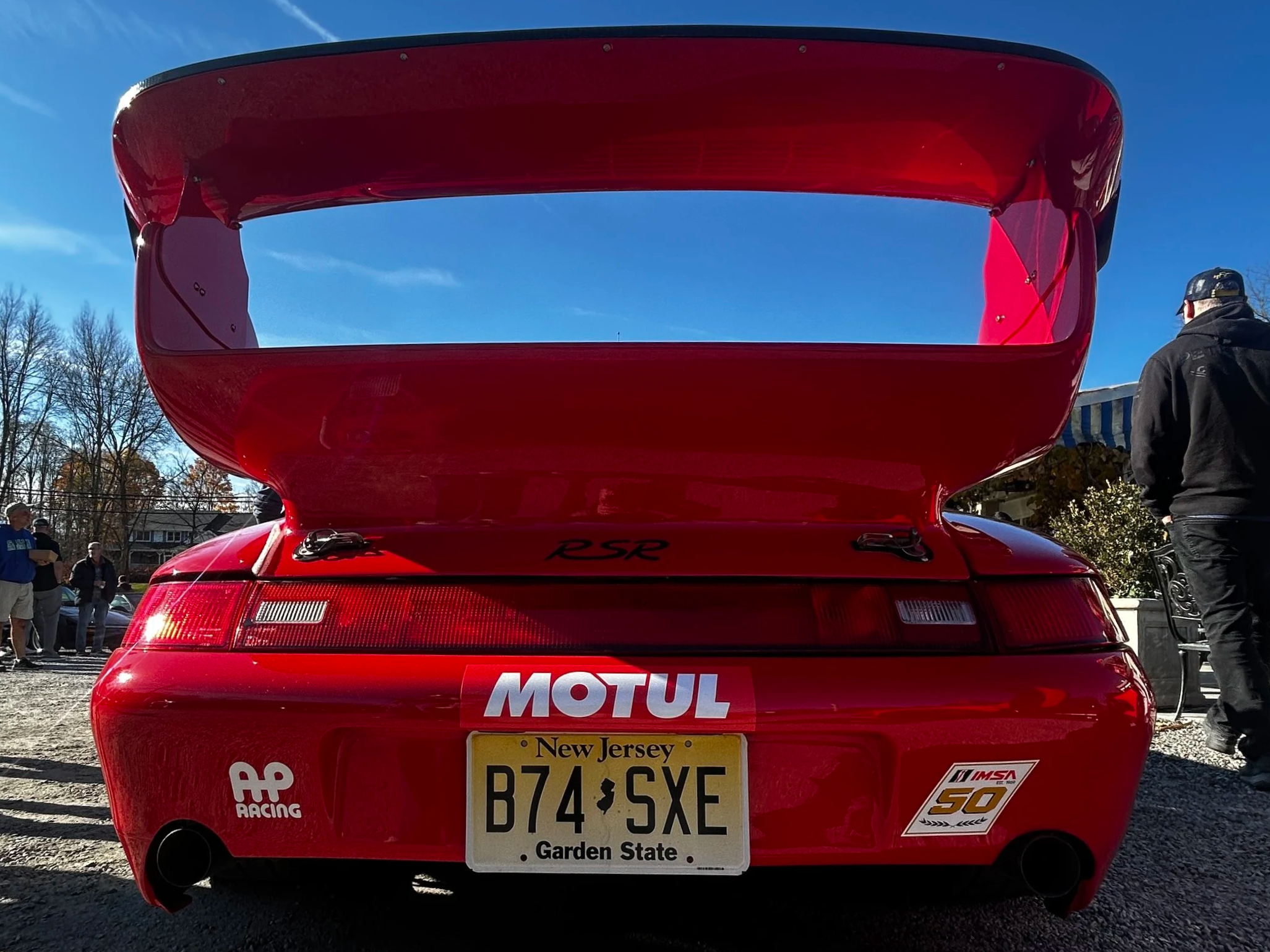
Rear-view of red Porsche seen on Smug Tool’s trip to Hayfield Market.
The red Porsche in this week’s photographs wears RSR lettering below an enormous rear wing. That is a good place to begin a question, provided we keep the question separate from an answer about this particular car’s identity. A photograph can show a badge. Establishing a competition car’s history takes records.
The factory story behind those letters starts with the 911 Carrera RSR 2.8, developed for the 1973 season from the Carrera RS 2.7. Porsche describes a car prepared for FIA Group 4 competition, with wider rear wheels and an enlarged flat-six. It was a recognizable 911 being asked to do a very serious job. [P1]
Porsche expands RSR as RennSport Rennwagen, or racing sport racing car. Even the name doubles down on the purpose. These were letters attached to a competition program with results to deliver. [P3]
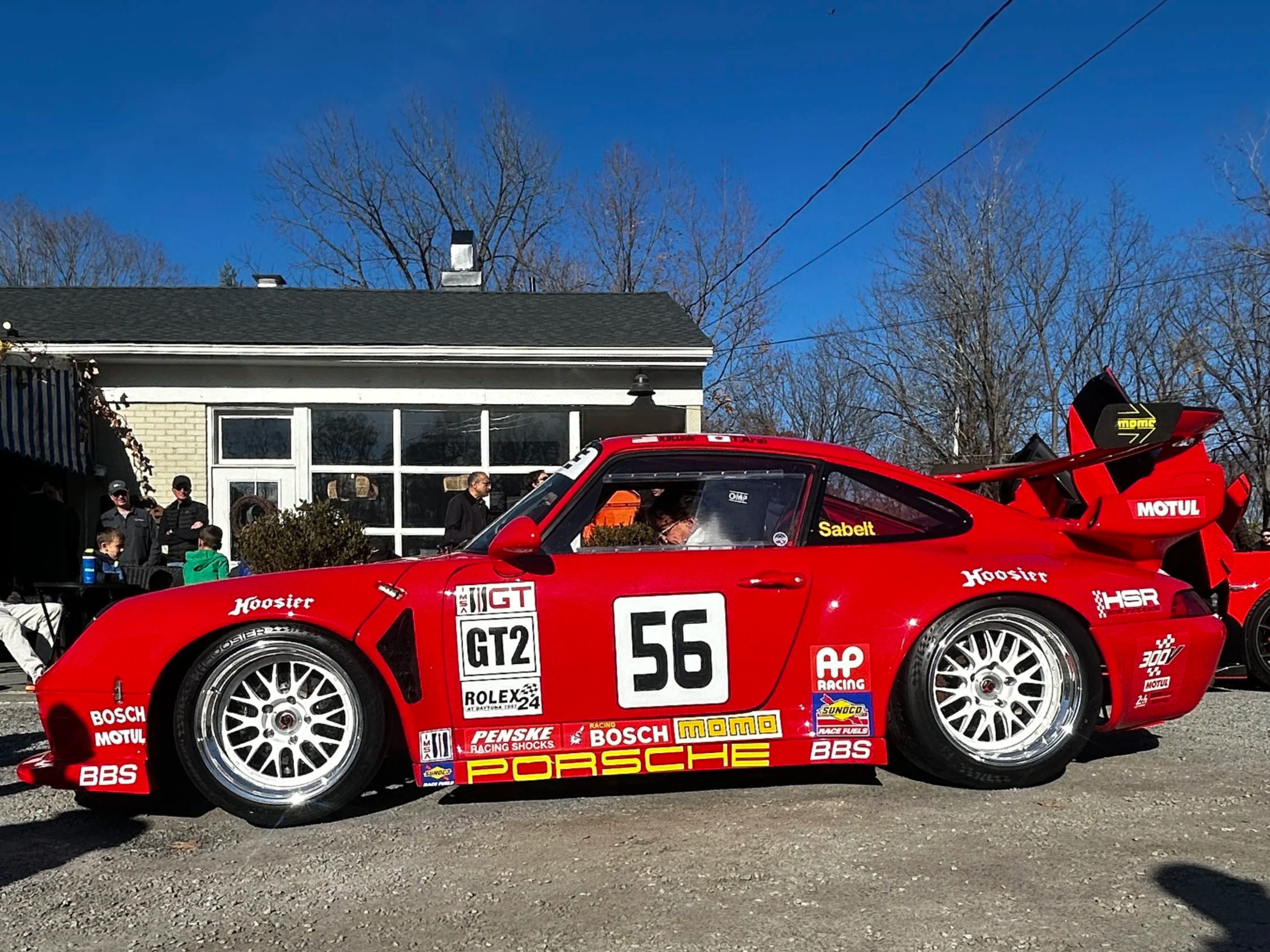
Side view of red Porsche seen on Smug Tool’s trip to Hayfield Market.
Start with the result
The debut at Daytona gave the program an unusually persuasive introduction. Hurley Haywood and Peter Gregg took overall victory in the 1973 twenty-four-hour race. That result gives the shape a different weight: people, distance and a finish line sit behind the familiar photograph. [P1]
Porsche’s museum account also places an early outing at the Corsica Rally in late 1972 and describes the car’s experimental role. Development was work in progress, with the machine being tested against different demands. The finished legend can make that process seem more inevitable than it was. [P2]
A shape made by decisions
Porsche lists 290 horsepower for the 1973 2.8-litre RSR and a weight of around 900 kilograms, despite a steel roll cage and a 120-litre fuel tank. Plastic doors, front lids and side windows helped keep that mass down. The number on a scale reflects hundreds of decisions about what a racing car needs to carry. [P1]
The changes did not stop with the first version. Porsche’s account follows the early car through a three-litre engine and modified suspension as its development continued. A familiar silhouette can conceal a moving target. That makes an exact date and specification much more useful than a general impression of “seventies Porsche.” [P2]
An owner’s answer may describe a faithful restoration, a later modification or a personal interpretation. All can be worth hearing. They are different stories, and the person who built or maintains the car can often tell you where the boundaries lie.
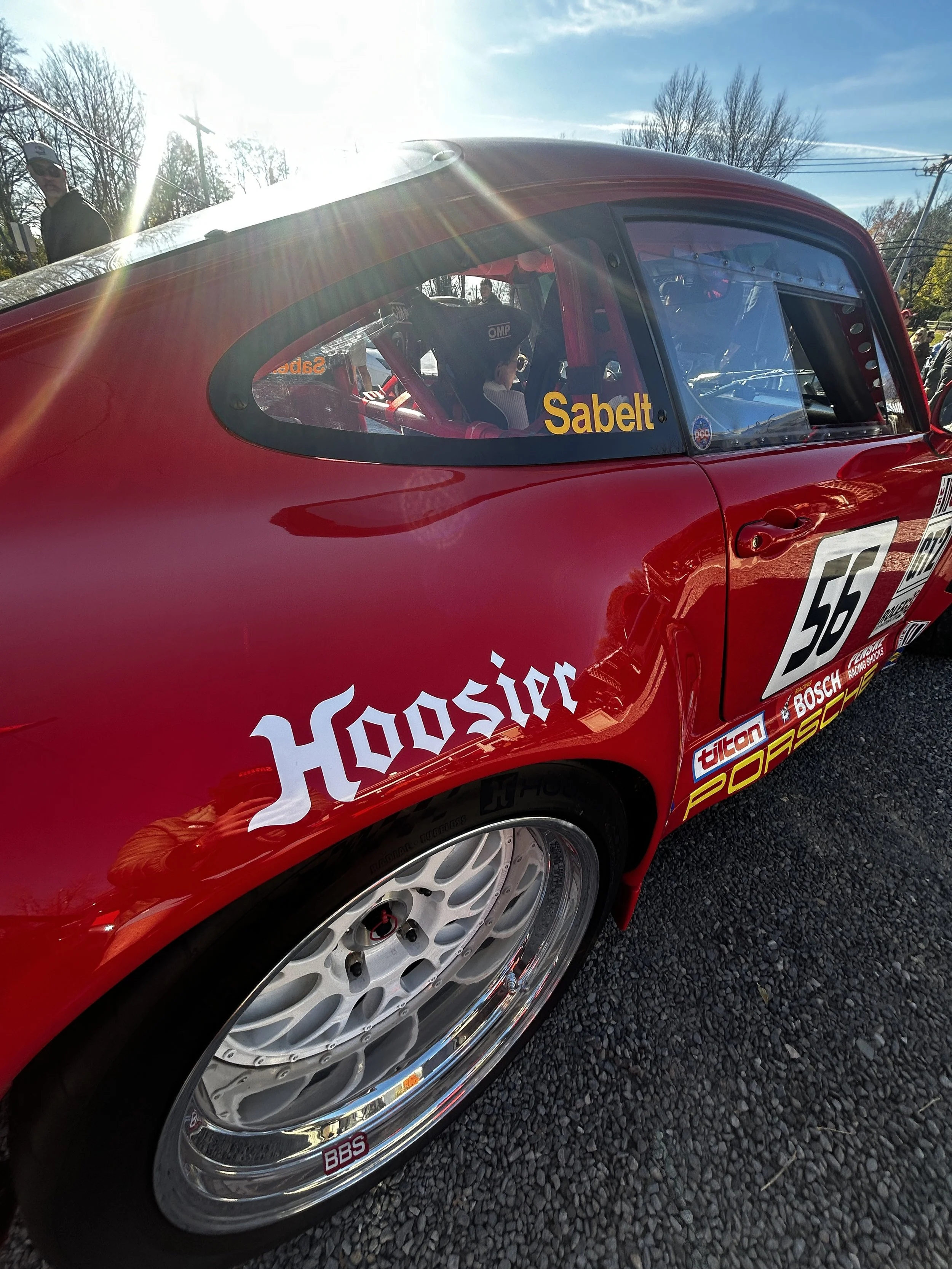
Details and decals of red Porsche seen on Smug Tool’s trip to Hayfield Market.
Enjoy the car in front of you
Our Sunday photograph is an invitation to look, not an authentication certificate. Its wing creates a spectacular frame for the people standing beyond it. The decals, lettering and stance make the rear view compelling without requiring us to assign a factory chassis number from a phone image.
For the next meet, carry one good question instead of a rehearsed verdict. Ask which detail took the most work, what the owner would change, or where the machine is happiest being driven. A badge can open that conversation. Interest keeps it going.
The original RSR earned its place through competition. The useful habit for the rest of us is to keep looking beyond the letters toward the decisions, people and miles behind them. There is nearly always more to enjoy once you ask.
P1 Porsche RSR history April 24 2020https://newsroom.porsche.com/en_AU/2020/motorsports/porsche-motorsport-rsr-models-story-20674.htmlP2 Porsche Museum Carrera RSRhttps://newsroom.porsche.com/en/press-kits/Porsche-Museum/Porsche-911-Carrera-RSR.htmlP3 Porsche 12 things about RSRhttps://www.porsche.com/stories/innovation/the-le-mans-winning-porsche-rsr/