

A Bugatti, a boat called Kid Boots, an Audi quattro and a Husqvarna in Baja. Women have been making consequential decisions around machines for a very long time.
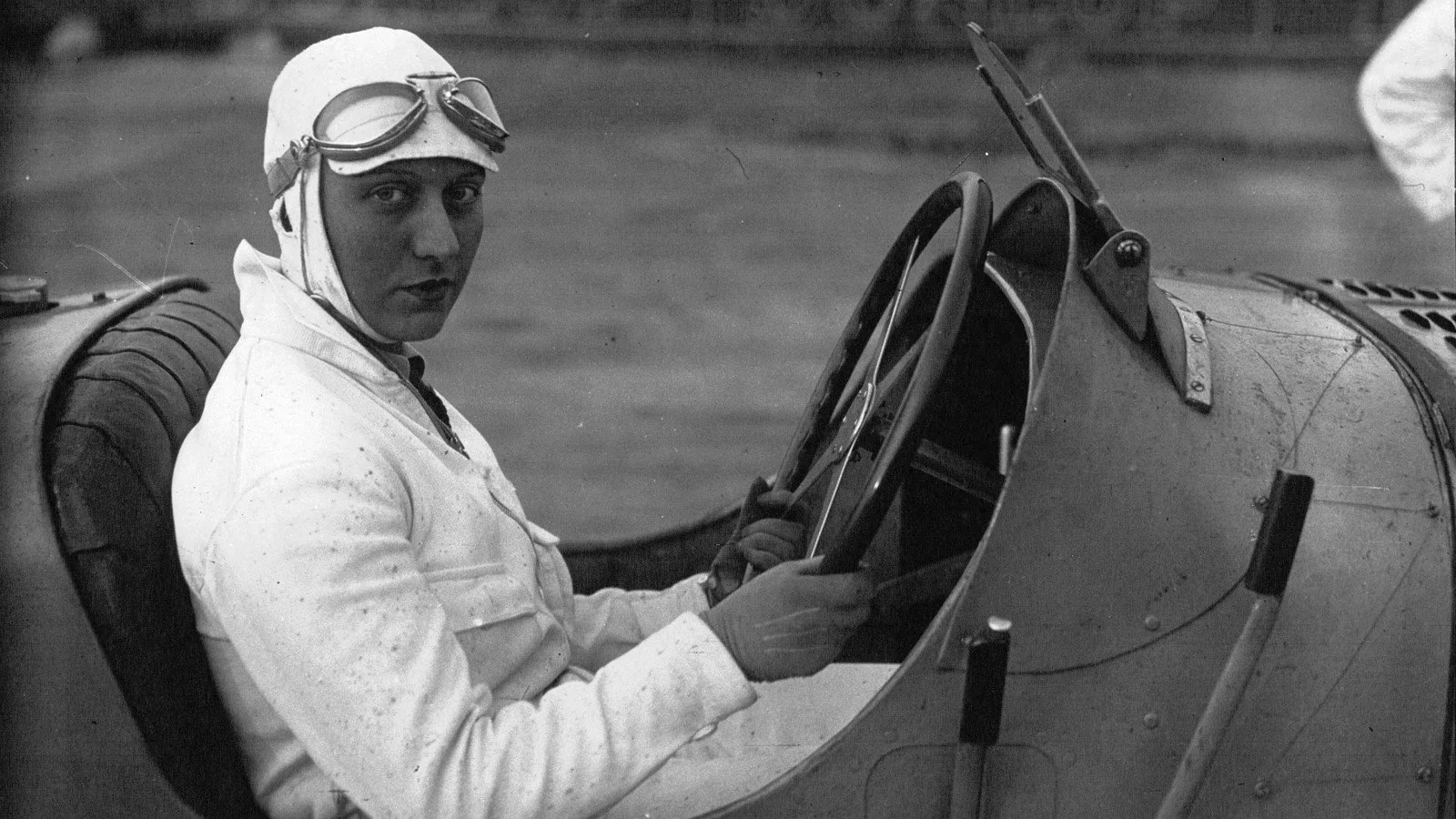
Hellé Nice at Montlhéry in 1929. Photo or illustration: Agence Meurisse / Bibliothèque nationale de France, via Wikimedia Commons
Hellé Nice had a Bugatti invoice. Spanish Marie had a boat called Kid Boots. Michèle Mouton had a quattro to place on the road, and Mary McGee had an entire Baja race to finish on a motorcycle. Start with the hardware and the decisions become more interesting than the shorthand usually attached to the women making them. [W4, W6, W9, W10]
There is a timely reason to look again. Disney+ has announced The Pursuit: F1 Academy for November 19. Filmed around the 2025 season, it follows drivers including Doriane Pin, Maya Weug, Chloe Chambers and Alisha Palmowski. Their competition uses Tatuus T421 single-seaters with 1.4-litre turbocharged Autotecnica engines. These are Formula 4-level machines, not Formula 1 cars. [W1, W3]
Across the Atlantic, Mazda’s MX-5 Cup offers another view. IMSA’s January 2025 Daytona preview announced six women, including Sally Mott and Heather Hadley, in a mixed field of thirty-five cars. Women’s racing stories are reaching audiences through documentaries as well as race broadcasts. They also have a history worth looking at outside the television frame. [W2]
The racers and the rumrunners did different things, with very different consequences. What makes them belong in the same mechanical history is how clearly an actual machine brings a person’s role into focus. Who bought it, ran it, prepared it or drove it? That is where the good details are.
The Bugatti and the invoice
Before Hellé Nice became known for racing, she was a Parisian performer. The combination of spectacle and serious machinery was unusually good publicity. But the paper trail gets more interesting than the nickname.
A Christie’s account of Bugatti chassis 4863 describes original factory paperwork, scrapbooks and an invoice dated March 29, 1930, totaling 40,000 French francs for its purchase by Nice. The auction history also explains that the car’s specification changed later. Even a machine with paperwork this good could have several lives. [W4]
The Bugatti Trust identifies Nice in a Type 35C at Mont Ventoux in 1932. Her career moved from performance toward a different kind of public exposure: a driver, a competition car and an event where the result had to survive whatever anyone thought of the woman in the cockpit. [W5]
There is pleasure in the specificity. An invoice makes the machine a purchase. A photograph makes its cockpit a place someone occupied. The person we are looking at had money committed and work to do. The white overalls and the camera can stay in the picture; so can the mechanical seriousness of what she was driving.
Spanish Marie and Kid Boots
A few years earlier, in South Florida, Marie Waite’s business involved getting liquor to customers during Prohibition. Known as Spanish Marie, she operated in the trade linking the Bahamas, Cuba and the Florida coast. Historian Sally J. Ling describes her boat operation and its use of radio communications. [W6]
Kid Boots gives that story an anchor. Ling places the vessel at the Coconut Grove unloading that ended in Waite’s arrest on March 12, 1928. The published account identifies a boat master and truck drivers alongside her. The picture is of a business connecting waterborne transport to work ashore, rather than one solitary person at a wheel. [W6]
The boat’s name is sufficiently good that it hardly needs embellishment. Neither does the work involved: vessels, crews and a customer on the other end. Her role belongs in that account because the operation was hers to direct.
Kid Boots also changes the scale of the story. A boat needs attention even when nobody is watching. The crew, the cargo and the work ashore do not disappear when the headline moves on. Waite’s business depended on people and equipment doing their jobs, with the possibility of arrest hanging over the whole enterprise.
The woman selling the cargo
Gertrude “Cleo” Lythgoe belongs beside that story, although her role needs a different verb. The National Archives describes her spending weeks aboard Bill McCoy’s ship on Rum Row, selling liquor for a London-based company after male wholesalers squeezed her out of the Nassau market. It also records the Queen of Rum Row label used by reporters. [W7]
The machinery here is a shipping system: a vessel offshore, a cargo and smaller craft making connections. Lythgoe’s place in it was commercial. The person making the sale could hold considerable authority without being the person steering the boat. There was more than one way to command a piece of this trade.
Willie Carter Sharpe supplies a road-going counterpart. Ferrum College’s Blue Ridge Institute and Museum records the attention she received during Virginia’s Franklin County conspiracy trial, where she was described as the queen of Roanoke rumrunners. Her story belongs to whiskey hauling and the roads connecting a product to its market. [W8]
Its wider account makes a useful observation about the much-repeated moonshine-to-racing connection: in the Blue Ridge, shared garage and mechanical skills were more substantial links than the number of haulers who entered organized races. The work of making a vehicle reliable and manageable mattered in both worlds. That is a better bridge back to the circuit than pretending every runner became a racer. [W8]
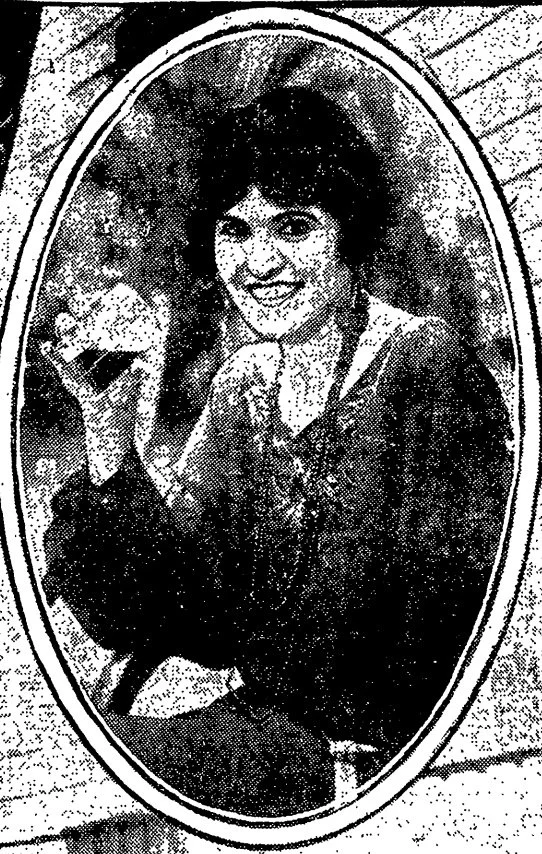
Gertrude Lythgoe in a portrait published by The Baltimore Sun in 1924. This is Lythgoe, not Marie Waite. Credit: The Baltimore Sun, 1924 / via Wikimedia Commons. Public domain in the United States because of publication date
Mouton had somewhere to put the quattro
At Sanremo in October 1981, Michèle Mouton and co-driver Fabrizia Pons won a World Rally Championship round in an Audi quattro. Audi’s history places their victory in the first season of the car’s world-championship competition. Four-wheel drive was beginning to change what a rally car could do. [W9]
That makes the machine essential to the story, but hardly sufficient to explain the result. Somebody still had to drive it and somebody had to deliver the information from the other seat. A drivetrain does not choose a braking point or build a working relationship between a driver and co-driver.
By 1985, the job and the machinery had changed. Audi records Mouton’s overall Pikes Peak victory in the shorter Sport quattro. The long-wheelbase car of the 1981 Sanremo win and the later hill-climb machine mark different chapters in a career that kept finding new places to go quickly. [W9]
The detail lets the career grow beyond a single famous image. Different events asked different things of the car and the crew. The driver’s name belongs with those distinctions, in the same place it would for anyone whose results we take seriously.
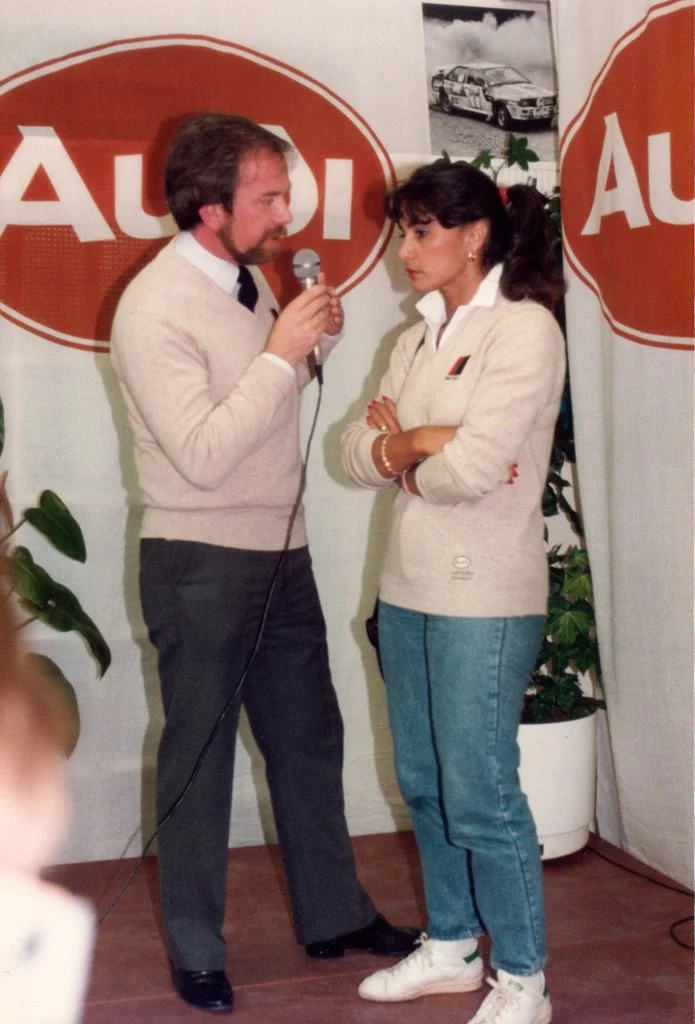
Michèle Mouton interviewed in Cardiff before the 1985 Welsh International Rally. This is not a photograph of the 1981 Sanremo victory. Credit: David AL Hilling / daffy-dub, via Wikimedia Commons. CC BY 2.0
Mary took the bike the whole way
Mary McGee’s racing life moved between cars and motorcycles. The American Motorcyclist Association records that she learned to ride in 1957 on a 200cc Triumph Tiger Cub, later taking up motorcycle road racing to improve her car-racing skills. One kind of competition led her toward another. [W11]
Her 1975 Baja 500 ride is the chapter that makes you stop. The Off-Road Motorsports Hall of Fame identifies the machine as a Husqvarna 250 and records her completing the race solo, ahead of seventeen two-person teams. That is a motorcycle, a rider and a long amount of work with nobody else taking a turn. [W10]
It is tempting to reduce the achievement to toughness. The machine makes it more demanding than that. A solo finish requires the rider to keep making useful decisions when fatigue has made the glamorous part of the idea irrelevant. The result is what remains after all the enthusiasm has had to survive an actual event.
McGee gives this history a different kind of speed. It is the ability to stay in the race for the whole distance, on a bike the rider has to bring home.
Back to the grid
Now return to the women in the modern paddock. A single-make Mazda series or an F1 Academy seat changes the equipment, the funding and the route into competition. It also makes room for a more specific conversation than the recurring surprise that women want to drive fast.
Look at the entry, the preparation and the result. Look at who can secure a seat and keep returning for the next round. Those are stories with money, work and consequences in them. The current documentary attention can bring new people to the cars; the history gives those viewers somewhere else to look.
Nice’s Bugatti, Marie’s Kid Boots, Mouton’s quattro and McGee’s Husqvarna are worth remembering by name. They put the person and the machine back together. Then the question becomes wonderfully direct: what did she do with it?
Sources
W1 Disney Plus Press The Pursuit F1 Academy announcement October 22 2026
W2 IMSA Whelen Mazda MX 5 Cup Poised for Groundbreaking 2025 Season January 20 2025
W3 F1 Academy Everything you need to know about the 2025 F1 Academy season
W4 Christies The ex Mlle Helle Nice 1927 Bugatti Type 35B Grand Prix chassis 4863
W5 The Bugatti Trust Photo archive Type 35C Helle Nice Mont Ventoux 1932 image 154A
W6 Sally J Ling historian Marie Waite Spanish Marie
W7 National Archives Prologue Smugglers Bootleggers Scofflaws Fall 2011
W8 Blue Ridge Institute and Museum Ferrum College Moonshine Blue Ridge Style sections on liquor haulers and the Franklin County conspiracy
W9 Audi Quattro in rallying
W10 Off Road Motorsports Hall of Fame Mary McGee induction biography
W11 American Motorcyclist Association AMA Hall of Fame Spotlight Mary McGee