

WHERE DID ALL THE YOUNG GUYS GO?
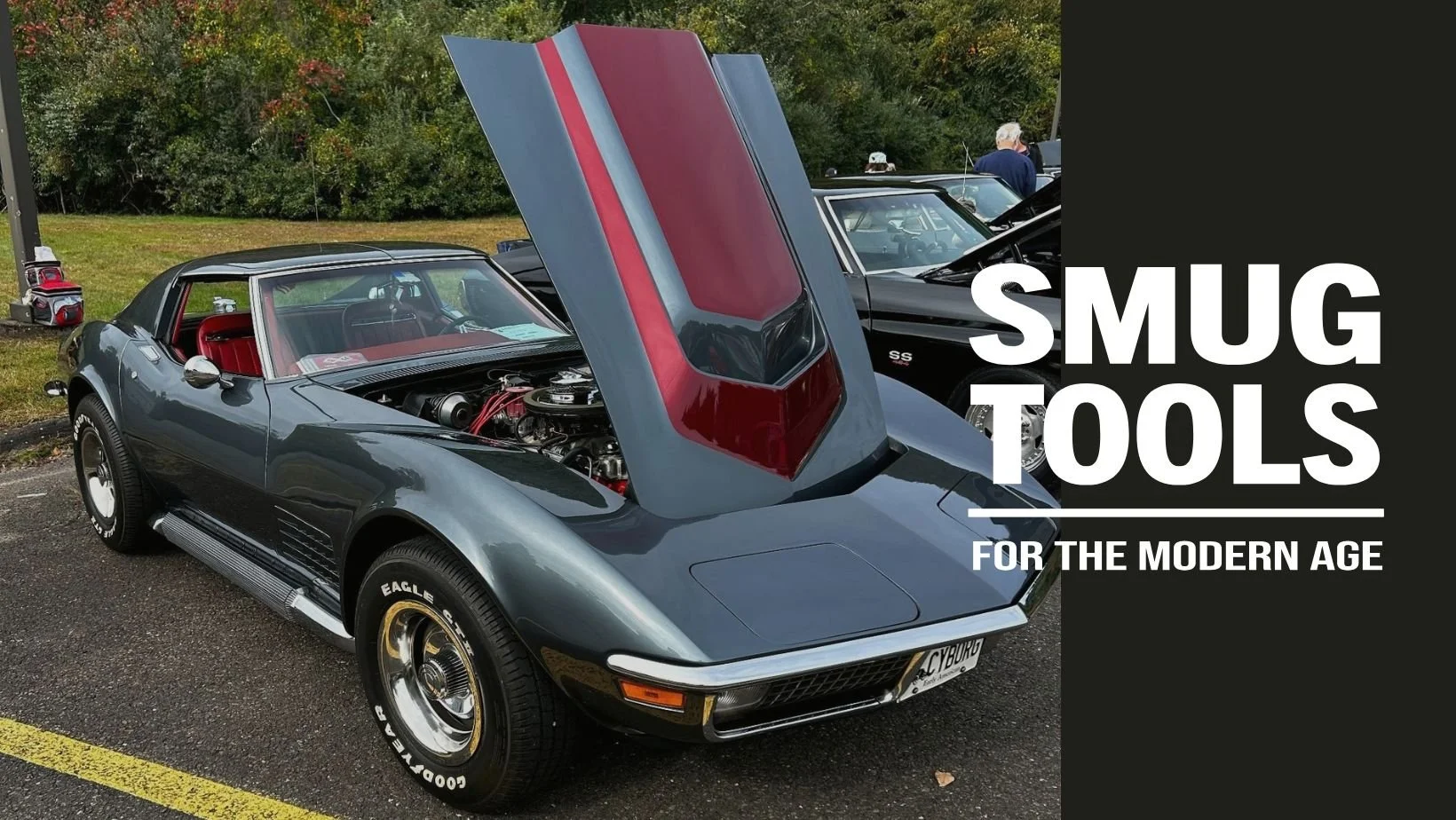
A Sunday at the Beacon Falls Lions Club Car Show - and a question about who gets to own America's old cars next.
There are worse ways to spend a Sunday morning than pointing an Audi up a Connecticut back road in October.
The 20th Annual Beacon Falls Lions Club Car Show had originally been scheduled for the previous weekend before getting pushed to October 4. Registration started at eight, trophies came at two, and somewhere in between a parking lot in Beacon Falls filled up with the kind of machinery that makes you start doing irresponsible math in your head.
The ride up was about 45 minutes in my S-line A5.
Perfect weather. Fall starting to show in the trees. Connecticut roads twisting through the hills with long stretches where the modern world seems to disappear for a minute.
Smuggler roads.
The kind of road where you can still disappear for a few miles.
Then you arrive.
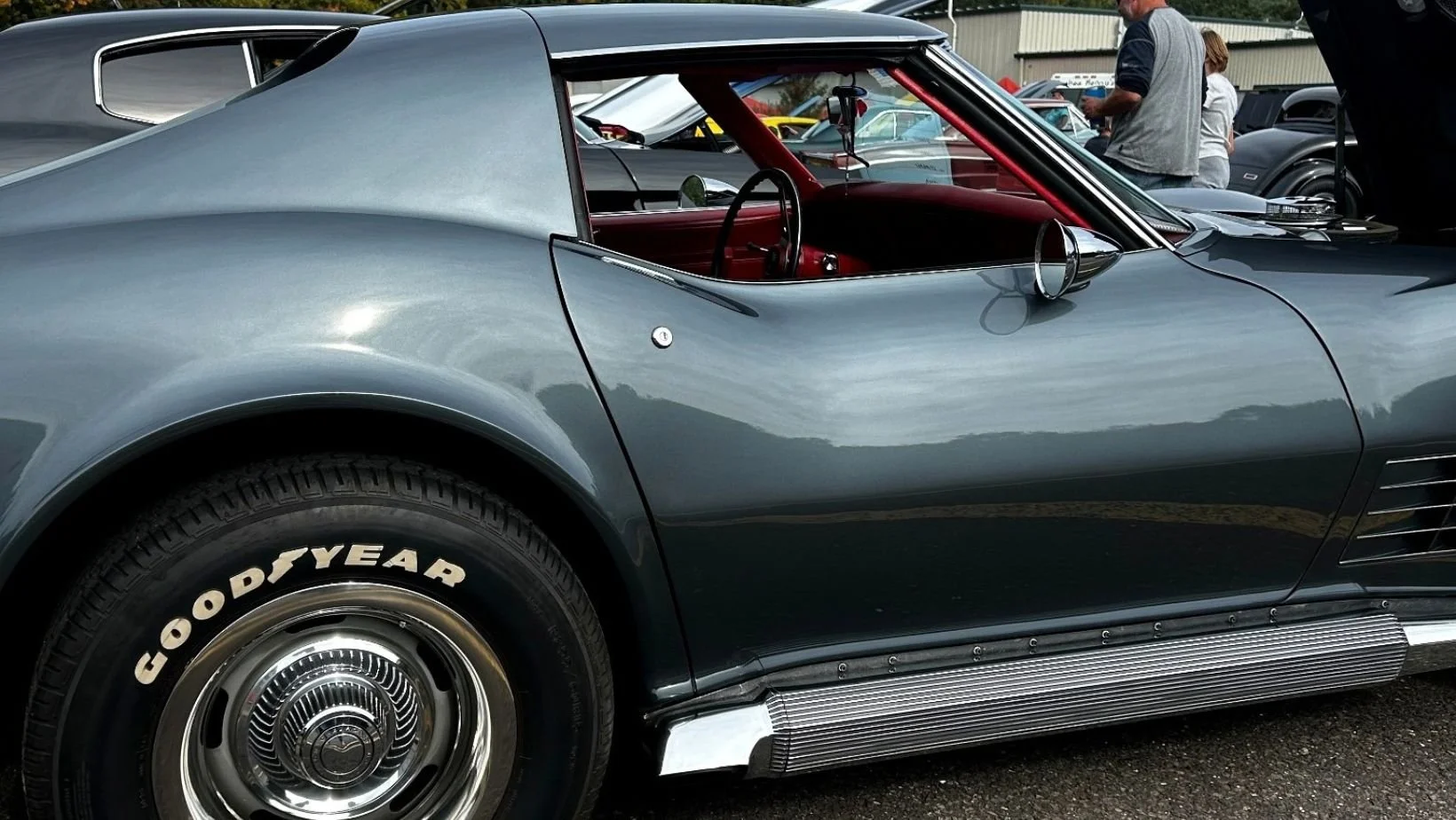
Corvettes. Chevelles. Monte Carlos. Hot rods. Engine bays clean enough to eat off of. Chrome, carburetors, hand-painted lettering and enough old speed-equipment decals to cover a toolbox.
There was a beautiful gray C3 Corvette with a red interior that looked right from basically every angle.
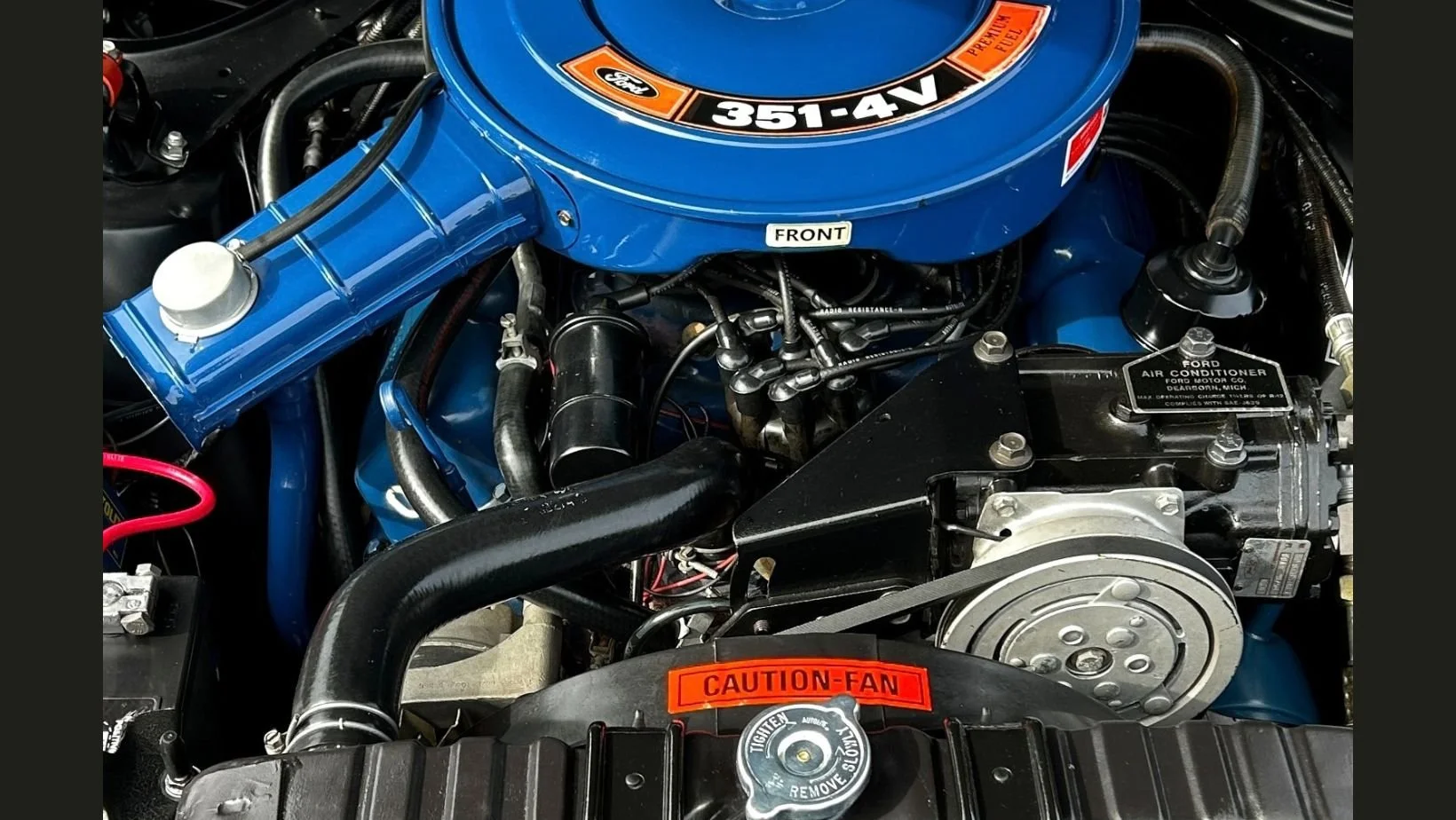
Nearby, somebody had a Ford 351-4V engine bay detailed like it was awaiting inspection at the end of the assembly line.
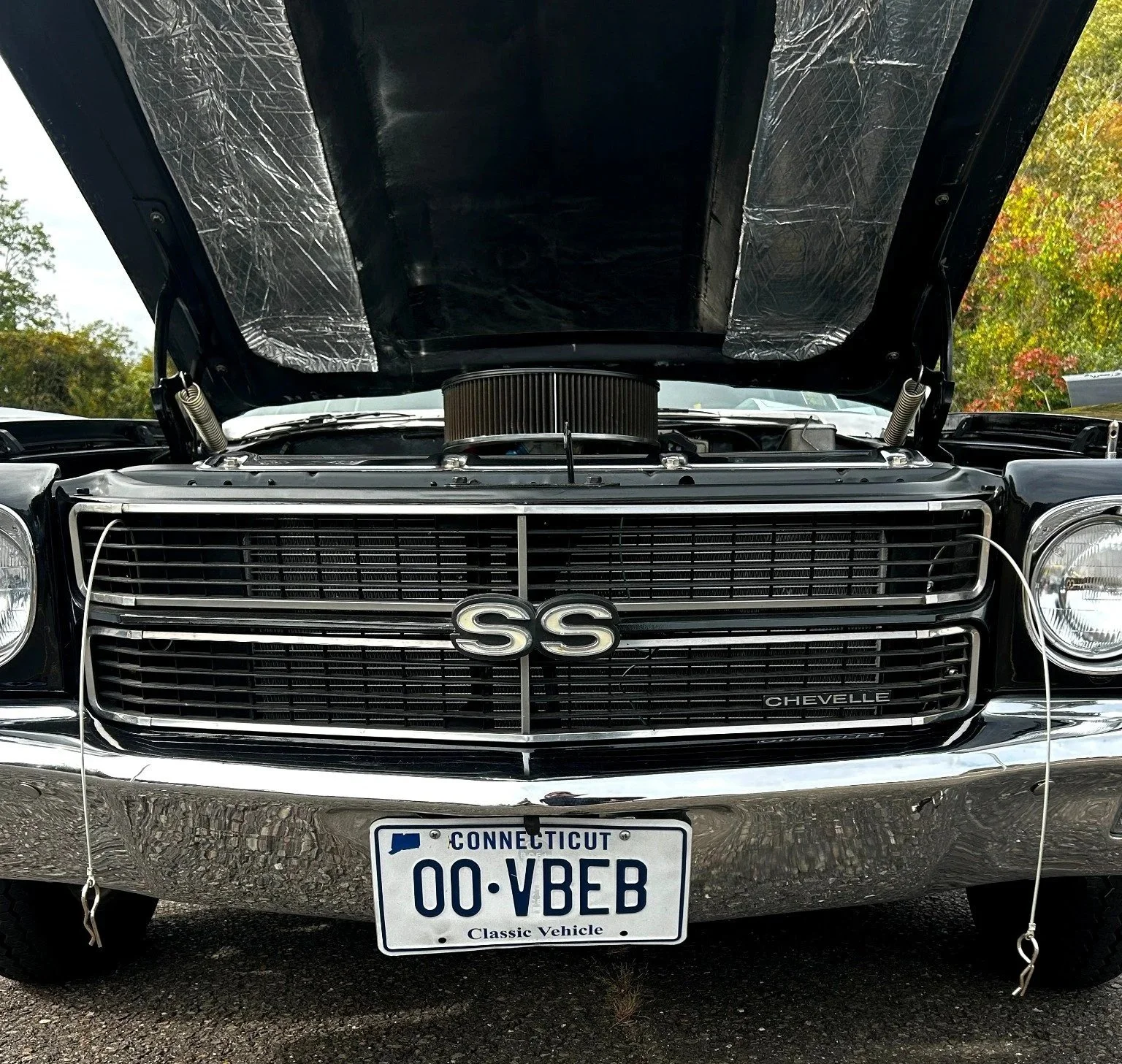
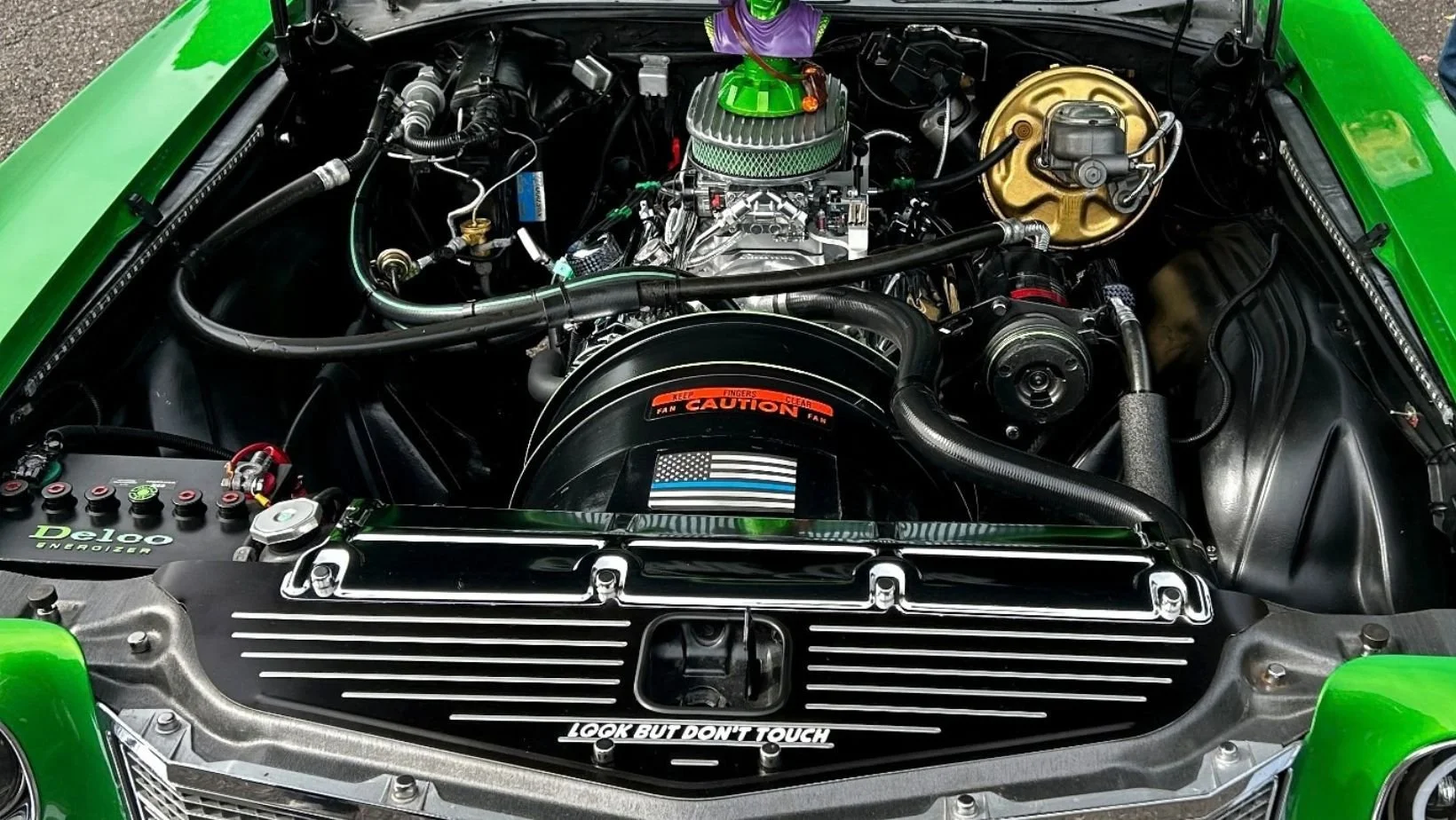
A black Chevelle SS sat with its hood open.
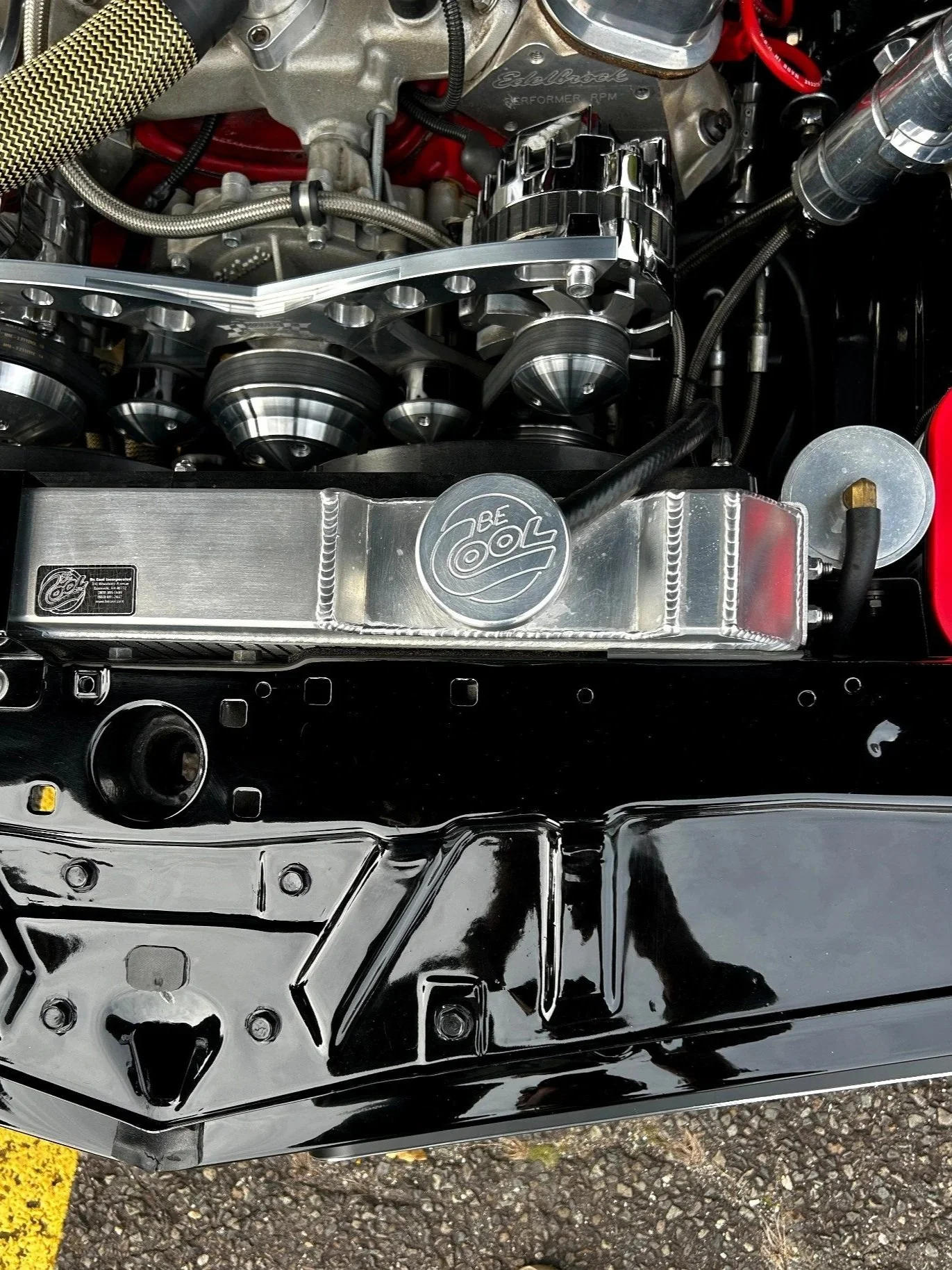
Another car had a radiator that literally said BE COOL on it.
Good advice.
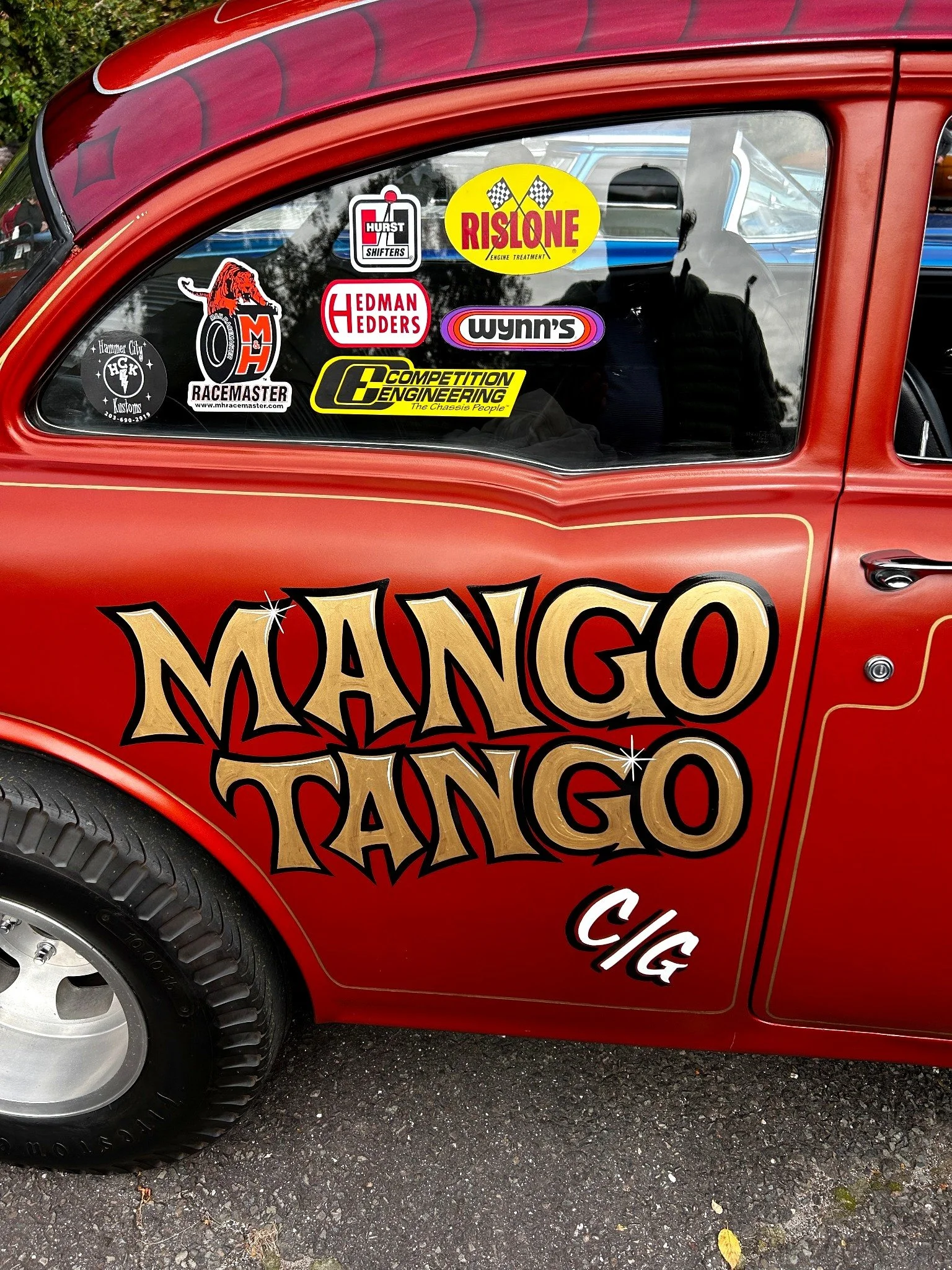
And then there was Mango Tango.
Big lettering down the side, fat rear tire and a quarter window covered in Hurst, Hedman Hedders, Wynn's, Competition Engineering, Rislone and Racemaster stickers.
That window deserves its own story. More on that another day.
But walking around Beacon Falls, something else started bothering me.
Where were all the young guys?
Not young guys looking at old cars.
Young guys owning really good old cars.
The classic-car middle class
There used to be a pretty straightforward route into this world.
You didn't necessarily buy the finished car. You bought the one you could afford.
Maybe the paint sucked. Maybe the motor smoked. Maybe somebody had done horrifying things to the wiring in 1987.
You brought it home anyway.
Then you learned.
You bought a manual. You bothered the old guy down the street. You figured out what a carburetor actually did. You learned that the thing you just broke was going to cost you your entire Saturday.
And eventually the shitty car became a pretty good car. Then maybe a fast car. Then maybe the car everybody else wanted.
There was a time when not being able to afford the car you wanted didn't mean you couldn't have it. You bought the version nobody wanted, learned how it worked, and made it better.
That's the part that feels different now.
A beautifully restored classic can cost serious money. And if you can't afford somebody else's finished car, the alternative requires something else that has become valuable: knowledge.
You need a place to work. Tools. Time. Patience. And you need to know what the hell you're looking at when the hood comes up.
It would be easy - and pretty entertaining - to blame the whole thing on young guys playing video games instead of rebuilding small blocks.
Unfortunately, the numbers ruin that argument.
The kids actually want the cars
Hagerty surveyed more than 2,000 Americans in 2024 and found 60% of Gen Z respondents were interested in owning a classic car, compared with only 31% of Baby Boomers. Gen Z and Millennials also reported surprisingly high levels of current or previous classic ownership.
So the young guys didn't stop liking cars. They're just buying different old cars.
Hagerty says the vehicle Gen Z enthusiasts most commonly inquire about insuring is the 1990-98 Mazda Miata. For Millennials, it's the 1988-2000 GMT400 truck.
That makes perfect sense.
Because a 1994 Miata is becoming to a 25-year-old today what some American classics once were to previous generations: the way in.
The market itself has started moving with them. Cars from the 1980s, '90s and increasingly the early 2000s have become legitimate collector cars, from Japanese performance cars and German sedans to SUVs and pickup trucks.
So maybe the middle class of the car hobby didn't disappear. Maybe it moved.
$100,000 nostalgia
There's another problem.
The older American classics occupying the center of traditional car-show culture aren't always inexpensive toys anymore.
As one illustration, Hagerty's index of desirable 1950s American collector cars had a median excellent-condition value above $100,000 back in 2021. Hagerty also found younger enthusiasts were particularly price-sensitive in that market.
Meanwhile, Hagerty's broader enthusiast data has put the average collector-car enthusiast at 56 years old with household income around $144,000.
That doesn't exactly describe the kid working his first decent job who wants to spend Saturdays learning how to rebuild a motor.
And there's an important distinction here.
A car can be popular with young people without being accessible to young people.
Everybody can want the '69 Camaro. That doesn't mean everybody can buy one.
Maybe the problem isn't interest. It's entry.
That's what Beacon Falls got me thinking about.
The future of car culture probably isn't dependent on convincing young people that old machines are cool. They already know.
The bigger question is whether there's still a ladder between wanting one and owning one.
And whether we're teaching enough people that buying the finished car isn't the only option.
Because the real magic of this culture was never exclusively owning something expensive.
It was knowing how the fucking thing worked.
It was lying underneath it. It was figuring out why it wouldn't start. It was borrowing the wrong tool. It was buying the right tool. It was fucking something up. And then it was fixing it.
That distinction matters.
A restored Corvette bought at auction is a beautiful thing.
A Corvette somebody dragged home half-dead and spent five years figuring out might mean something entirely different.
Neither owner is doing it wrong. But car culture needs both.
The quarter window
Before leaving Beacon Falls, I saw something that made the whole trip come together.
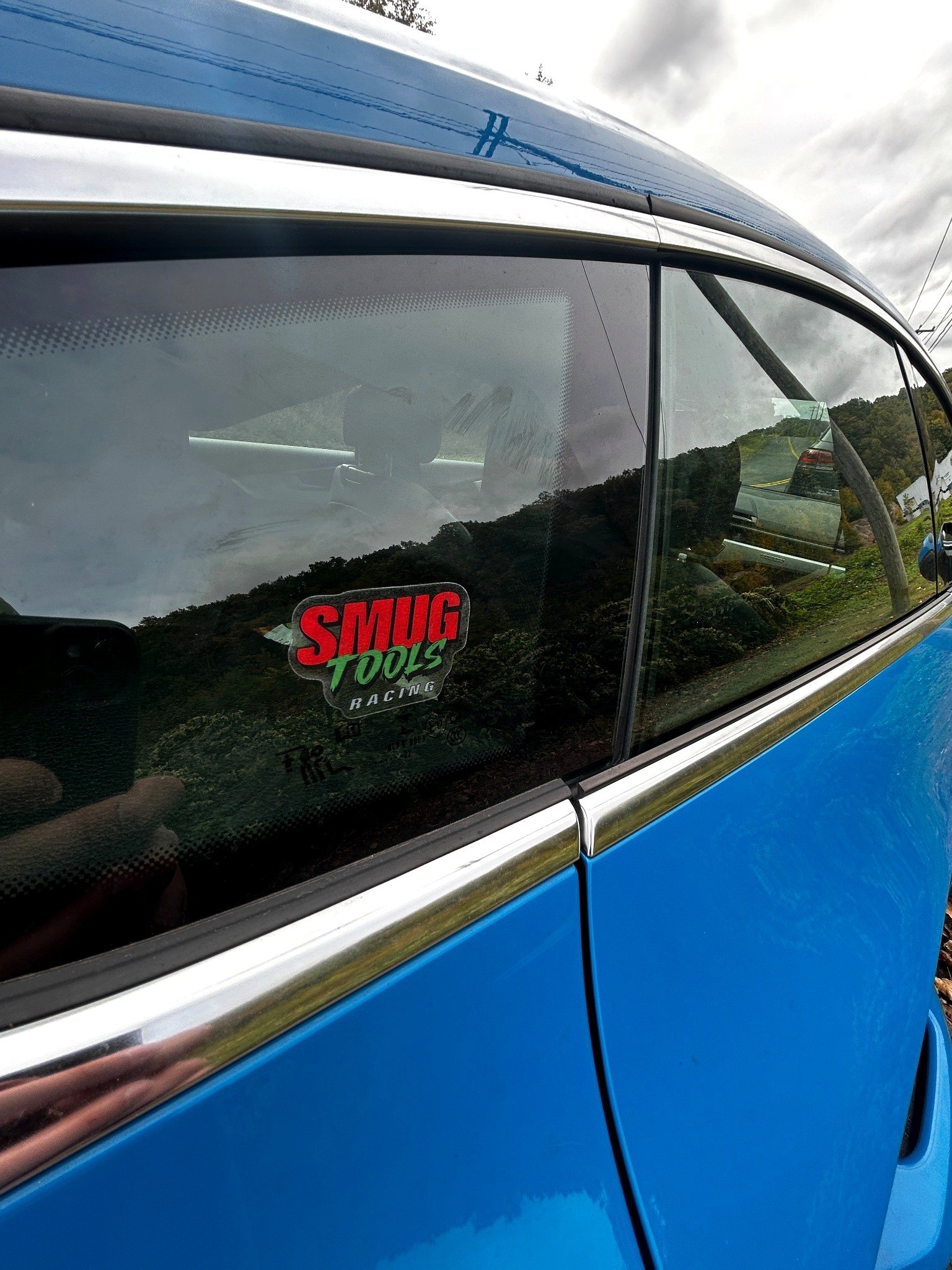
On the quarter window of a blue car sat a small red-and-green sticker: SMUG TOOLS RACING.
Nothing dramatic. Just another decal stuck to another car at another local show.
But twenty feet away was Mango Tango with that quarter window full of the brands that helped define an earlier generation of American speed culture.
Hurst. Hedman. Wynn's. Competition Engineering. Rislone. Racemaster.
Different generation. Different sticker. Same instinct.
You put the things you identify with on the machine you identify yourself by.
And maybe that's the answer to the question I had walking around Beacon Falls.
The next generation isn't necessarily going to preserve car culture exactly as they found it.
Good.
They're going to take the parts they like, ignore the parts they don't, buy the cars they can afford and eventually create their own version of it.
That's how this shit survives.
The important thing is giving them a way in.
Keep the old cars running.
Teach somebody younger how they work.
And leave a little room on the quarter window.
Footnotes and Research:
https://newsroom.hagerty.com/press/meet-gen-z-americas-next-generation-of-car-collectors/
https://www.lionsclubofbeaconfalls.org/lions-car-show-rain-date/