

A cotton answer to itchy football wool became an everyday uniform. The black SMUG crewneck keeps the useful part and adds a little attitude.
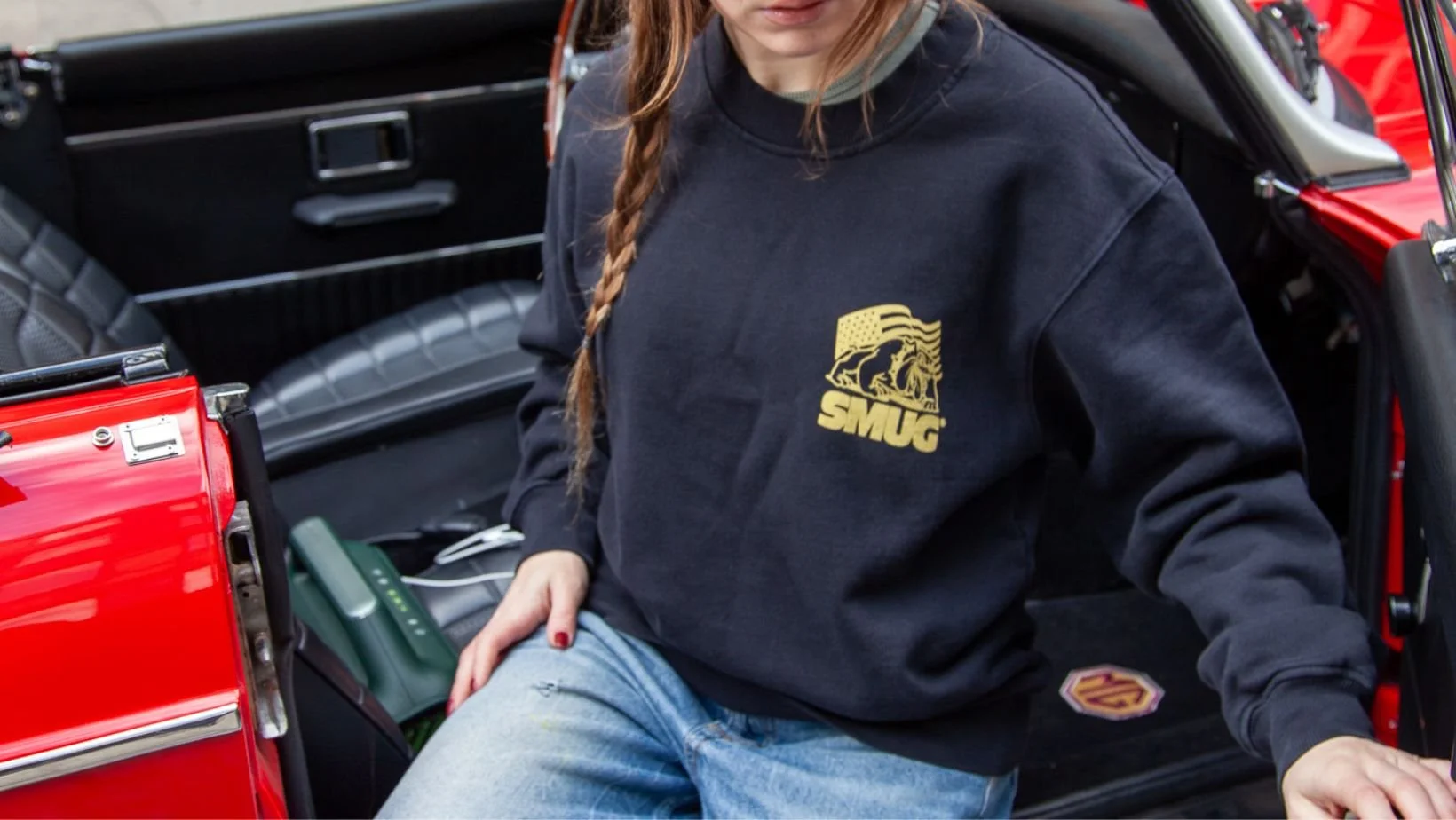
You probably own a sweatshirt that has outlasted a job, a relationship or a car. It lives on the back of a chair. It comes along when the weather looks questionable. It gets thrown over whatever you were wearing when somebody says, ‘We’re leaving in five.’
That kind of usefulness is a good place to begin a clothing story. Before the crewneck became a place to put a college name, a band or a bulldog, it was an attempt to make an uncomfortable piece of athletic equipment better.
First, make practice less miserable
Russell Athletic traces the sweatshirt’s origin to 1926. In the company’s account, football player Benjamin Russell Jr. wanted an alternative to the itchy wool jerseys he wore for practice. His father’s manufacturing business in Alexander City, Alabama, provided a way to try cotton instead. Russell dates production of its crewneck sweatshirt to 1930. [1]
The interesting part is the problem. A player wanted clothing he could move in without being irritated by it. The sweatshirt began as something to use.
A simple shape with room for identity
Look at a crewneck laid flat. Long sleeves. A round opening at the neck. Cuffs and a waistband that bring the shape back in. There is no hood to arrange under a jacket and no zipper dividing the front. It is a straightforward layer, with enough uninterrupted surface to carry a message.
That message became part of the garment’s appeal. Champion’s company history describes its 1934 development of the Champacraft flocking process for collegiate graphics and a relationship with Moe’s Sport Shop selling University of Michigan apparel. Sportswear could identify the people in the stands as well as the people on the field. [2]
A name across the chest tells you something before its owner says a word. It might announce a school, a place, a shop or a private joke. The same useful garment can carry very different allegiances.
For us, that is the lasting appeal of a graphic crewneck: an uncomplicated shape with a point of view. You can wear it often enough that the print starts to feel like part of your own uniform.
An everyday uniform
There is an easy way to make good casual clothing annoying: demand that it be styled like a museum object. The crewneck works better when you let it get on with things.
Wear it over a T-shirt with straight jeans. Put a work jacket over it when the temperature drops. Leave the back graphic visible when the jacket comes off. The point is to have a layer that belongs in the day you actually planned, including the part you didn’t.
We like that for the SMUG world. Early starts, a long drive, an afternoon at a car show, a shop stop that turns into an evening out. It is a styling choice built around having somewhere to go.
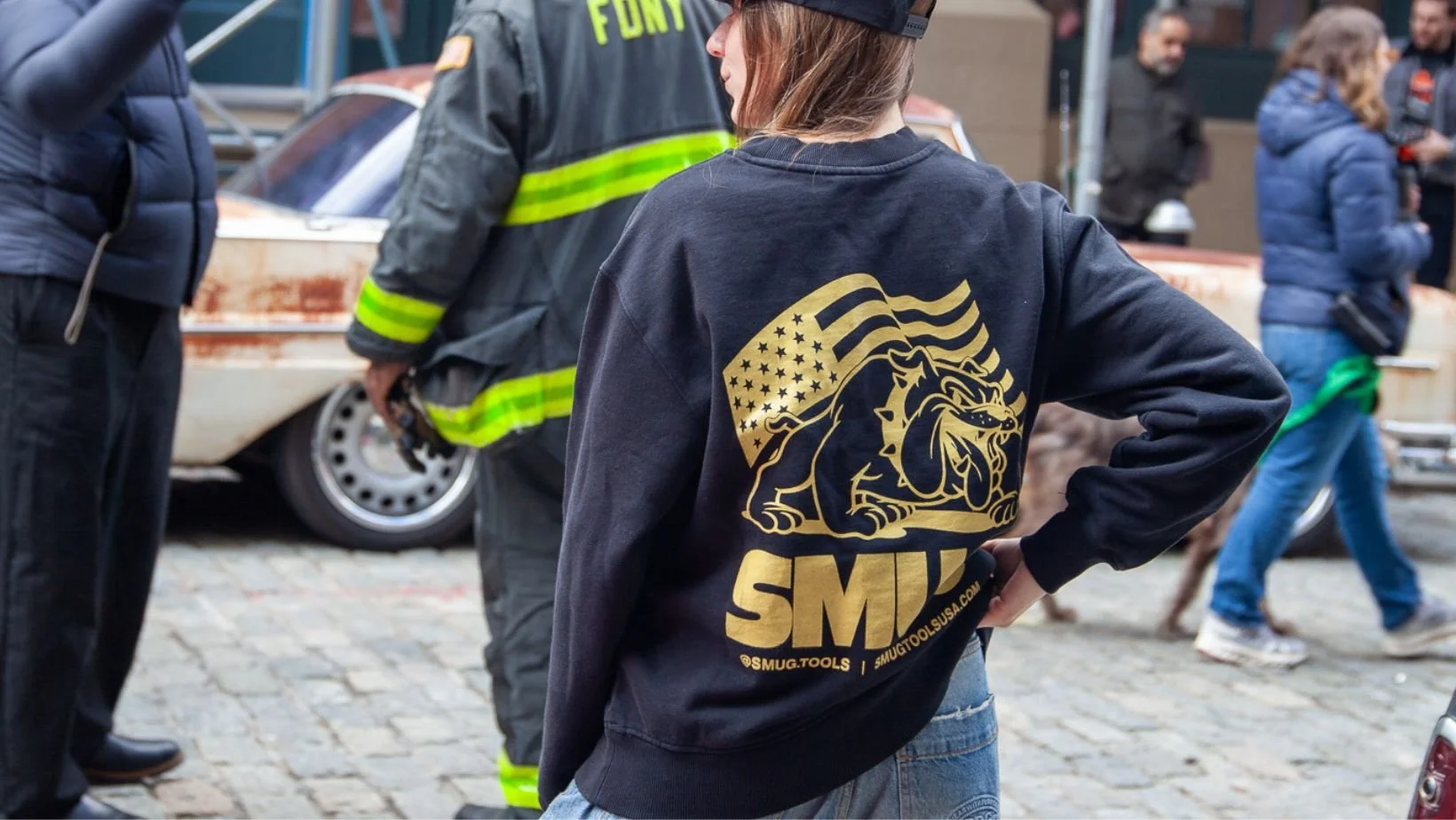
Our version: the black SMUG crewneck
The SMUG Black Crewneck takes that familiar shape in a heavier direction: 13.4 oz, 100% cotton fleece, garment-dyed black, with an intentionally oversized unisex fit. The yellow bulldog-and-flag artwork sits on the chest; the back gets the full-size graphic. [3]
Black and yellow do plenty of work together. From the front, the chest mark keeps the sweatshirt easy to wear under an open jacket. Turn around and the larger artwork makes its introduction. It is the same garment doing two different jobs.
The oversized fit is deliberate, so start with the product’s fit notes when choosing your size. The current listing’s care instructions call for a cold wash, inside out with like colours, followed by low heat or hanging to dry. Follow the garment’s care label if it differs. [3]
The sweatshirt’s origin is a story about getting a basic thing right. That is a useful standard to bring to the one you buy next.
Shop the SMUG Black Crewneck → https://www.smugtoolsusa.com/store/p/smug-crewneck-sweatshirt-black
Source notes
[1] Russell Athletic, “Who Invented the Sweatshirt?”
https://www.russellathletic.com/learn/whoinventedthesweatshirt
Brand account: 1926 proposal; 1930 production. Historical attribution retained.
[2] Champion, “Our Heritage”
https://www.champion.com/pages/about-champion
1934 Champacraft / Moe’s Sport Shop / Michigan account. No disputed Reverse Weave patent dates used.
[3] SMUG, Black Crewneck product listing
https://www.smugtoolsusa.com/store/p/smug-crewneck-sweatshirt-black
Current public copy, product images and specification; checked November 16, 2026. Public product name used instead of an unverified blank manufacturer claim.