

From a Nash dealership to a motel mailbox, the good keychains always had a job.
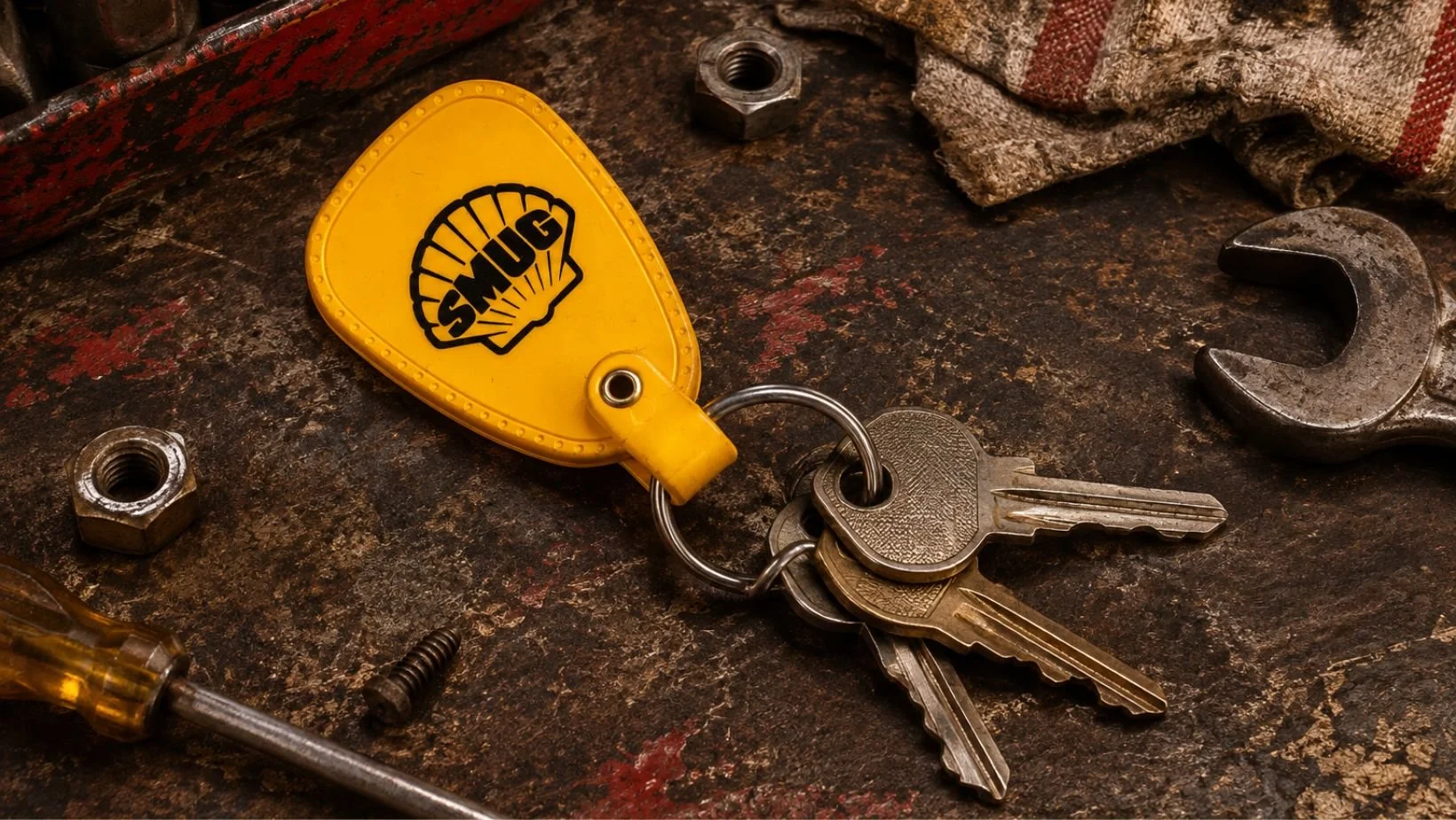
The part of an old keychain worth looking at is usually the back. The front might have a nice logo. Turn it over and you get a street address, a phone number or instructions for what to do if you accidentally drive off with the thing. A few inches of plastic or metal can tell you a surprising amount about where a car came from and how people used it.
Take the Nash Motors keychain in The Henry Ford’s collection, dated to around 1925. The ring is steel and the tag is celluloid. One side gives the name of Kremer Nash Motor Co., its Jefferson City, Missouri, address and a four-digit phone number. The reverse carries the Nash mark and tells you the dealer sells and services the cars. It’s a business card in a format that could survive the glove box. More importantly, it’s already attached to the thing you need when the car starts making a sound you don’t recognize.
The motel wanted it back
At the Sea Breeze Motel in Pacifica, California, the fob did a different job. The museum dates its example to between 1955 and 1970. There’s a room number and an instruction to drop the key in any mailbox. The motel guaranteed the postage. Turn it over and there’s a plug for the restaurant and cocktail lounge.
What makes it interesting is how many situations that tag had to handle. At the desk, it identified the room. In a pocket, it made the key easy to find. An hour down the coast, it told a distracted driver how to undo a small mistake. A picture of a motel sign gets you the look of the place. The tag gets you a little closer to what it was like to stay there.
A parts counter you could carry
A circa-1980 Mr. Goodwrench fob from Magouirk Chevrolet–Oldsmobile in Cimarron, Kansas, carries two identities. The front leans on GM’s national service campaign, launched in 1974. The dealership name and local phone number tell you which actual door to walk through. The same promise could travel across the country, but your key pointed to one shop.
That’s why these are fun to find loose in a box at a flea market. Plenty of the places printed on them changed hands or shut down. The fob is small enough to outlive the business without anybody ever setting out to preserve it. Somebody just kept using it, then dropped it in a drawer when the car was gone.
The SMUG one
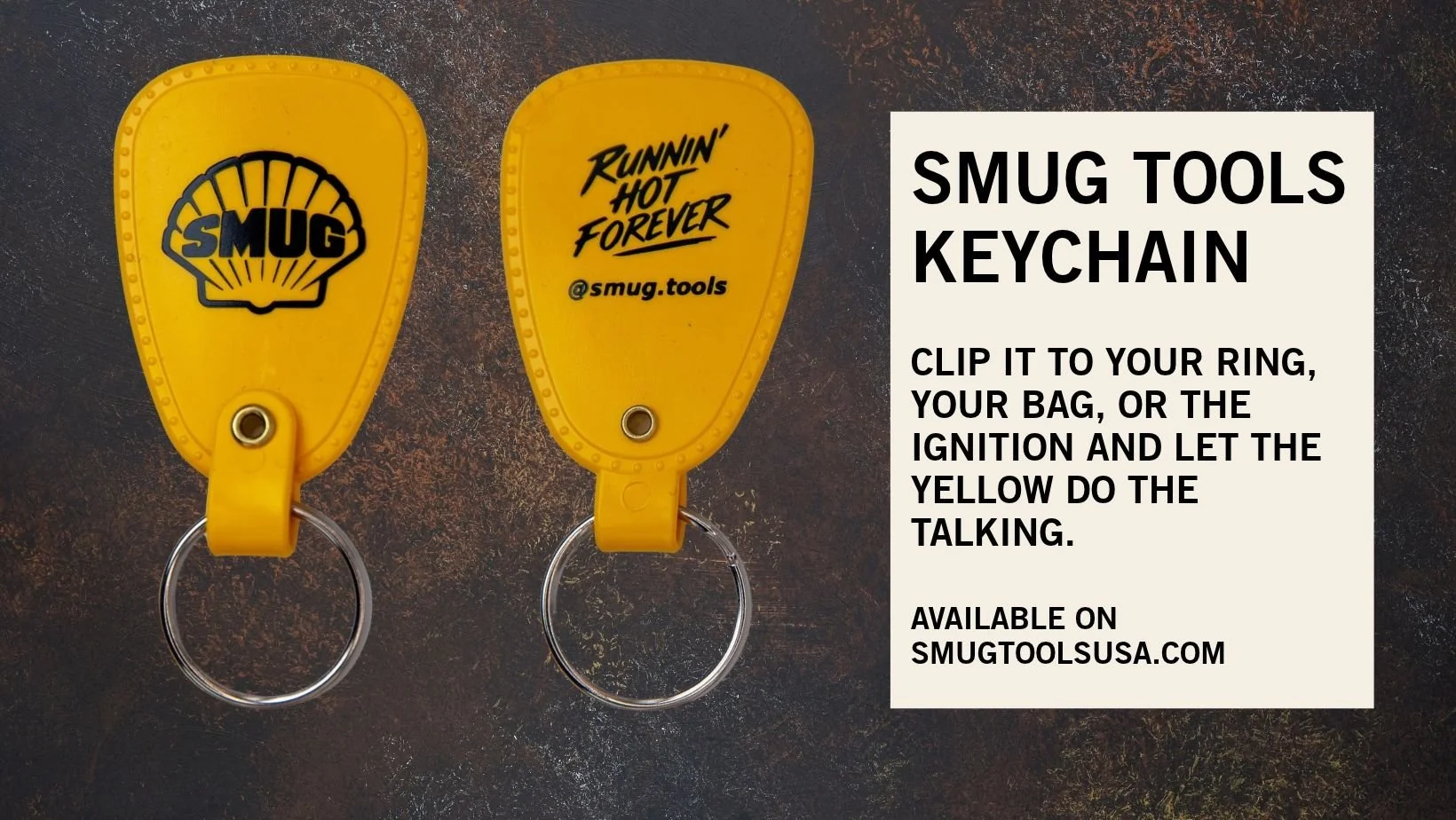
The SMUG saddle keychain design study works with that same tiny patch of real estate: a yellow teardrop, a dark mark and a loop for the ring. It has to read in your hand, under bad light and at an angle. You notice different things when it’s on a ring instead of centered on a screen. Is the shape easy to pick out among the keys? Does it still look good when it’s upside down next to the ignition?
The useful test is what happens after the photo. Clip a fob to the keys you actually carry. Leave it on there for a month. The best thing a keychain can do is become part of how you leave the house.
Sources